Onboarding new AI models without waiting on the development team
A ticket to the dev team for every new language model? We build AI systems where domain users are in the driver's seat themselves — connecting models, setting budgets, getting started.
- Customer
- Industry
- Education
- Service
- Software Development
- Time
- 1 Month
- Team
- 1 Developer
Teachers could use the AI feedback system — but not administer it themselves.
Students at FernUniversität in Hagen work through content independently, submit assignments, and need timely feedback — only then do they know whether they've genuinely understood the material. For a long time, teachers and tutors from higher semesters handled feedback creation themselves, which involved considerable effort.
The internal development department of FernUniversität in Hagen subsequently built its own AI feedback system. What had been missing, however, was visibility into what was happening inside the system — and the ability to steer it deliberately. Teachers wanted to know: How many assignments are being assessed automatically? How are students receiving the feedback? And what does operation cost per module? Because every AI-generated piece of feedback incurs costs. Until now, an overall budget could only be set outside the application, via the underlying infrastructure, by technical staff.

Framework expertise: results in four weeks instead of months of in-house development
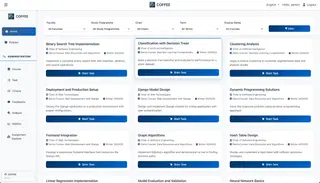
For self-administration, interfaces were created that teachers need for day-to-day operation: registering language models, setting usage limits, switching providers — tailored precisely to the teachers' workflows.
In parallel, a unified integration layer for language models was developed: whether a model runs via Azure AI Inference or locally via Ollama no longer matters for the configuration. Teachers select provider and model — the abstraction underneath ensures that evaluation criteria, prompts, and cost tracking work independently of the respective provider.
In addition, an analytics dashboard was created for teachers that makes usage and quality visible at the module level: how often the system is invoked, what operating it costs, and how students rate the feedback they receive. Alongside this, the groundwork was laid for the planned open-source release:
A unified development environment and installation documentation, in order to lower the entry barrier for internal and external developers.
Teachers operate the feedback system independently — without developer involvement
When a more capable language model appears or a provider reshuffles its portfolio, teachers carry out the switch directly in the administration interface — existing modules, including their stored evaluation criteria, can be migrated to the new model within minutes. How heavily the system is used per module and what costs arise from it are visible to teachers directly in the dashboard — as is how students rate the AI feedback they receive.
- Model switching without developer involvement:
- Teachers connect new language models via the administration interface and migrate existing modules along with their criteria to the new model — no code changes, no redeployment of the software. Deep technical expertise is not required.
- Usage and costs visible per module:
- Teachers see usage and costs for their own modules. Admins have insight into the overall system — and can adjust limits before budgets are exceeded.
- Ready for the open-source community:
- The tool is prepared for release: new developers can get started from a unified development baseline.
New paths are meant to be explored.
Tell us about your project so we can take the next step together.
Similar Projects
 Education/Software Development
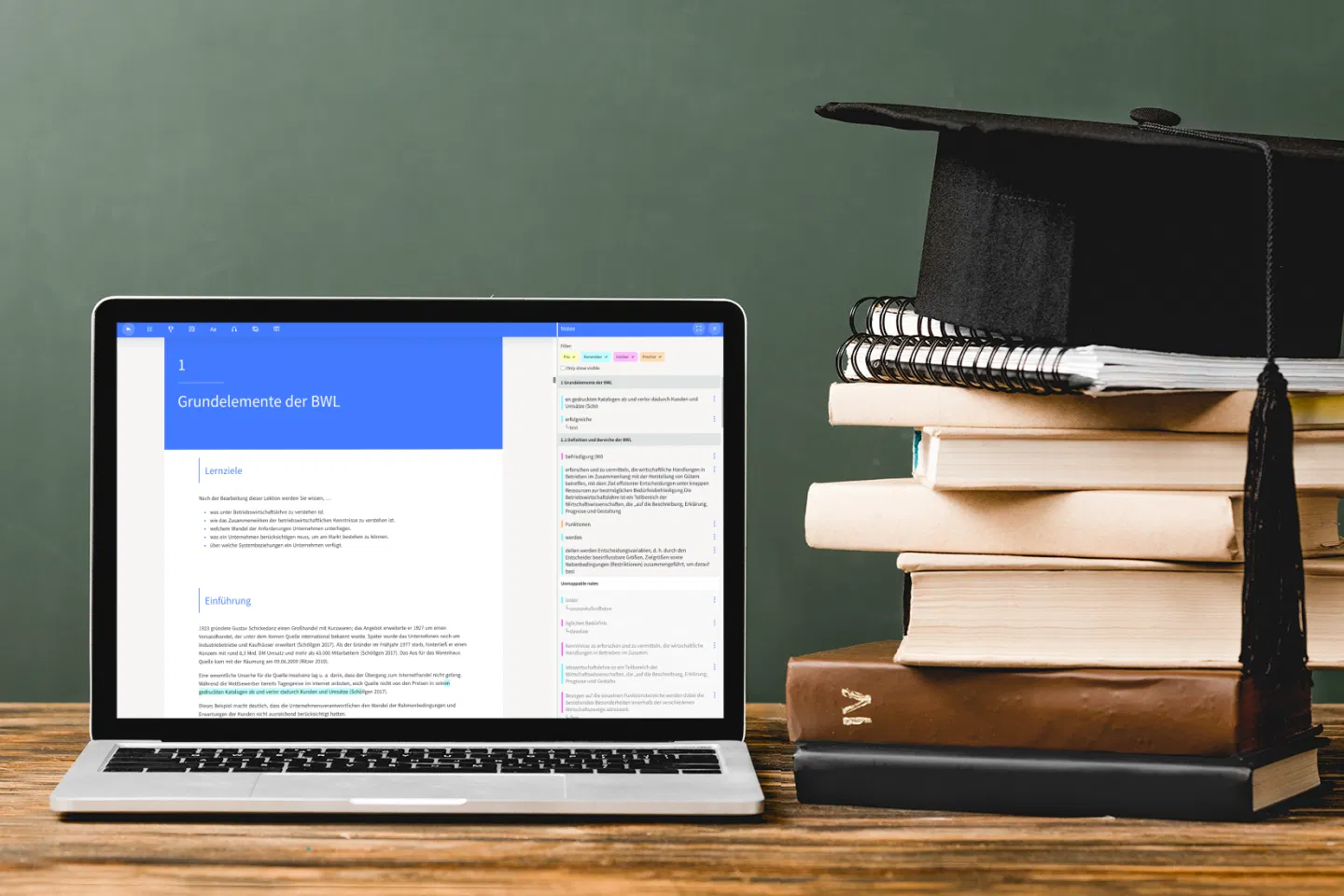
Development of a learning platform for Germany's largest university.
The platform delivers a digital alternative for physical study materials to over 130,000 students.
 Insurance/Artificial Intelligence
AI-assisted structured capture of printed legacy contracts
At many companies, documents pile up that conventional OCR technologies can do little with, making manual review and reconciliation processes necessary. AI is more than up to this challenge.